
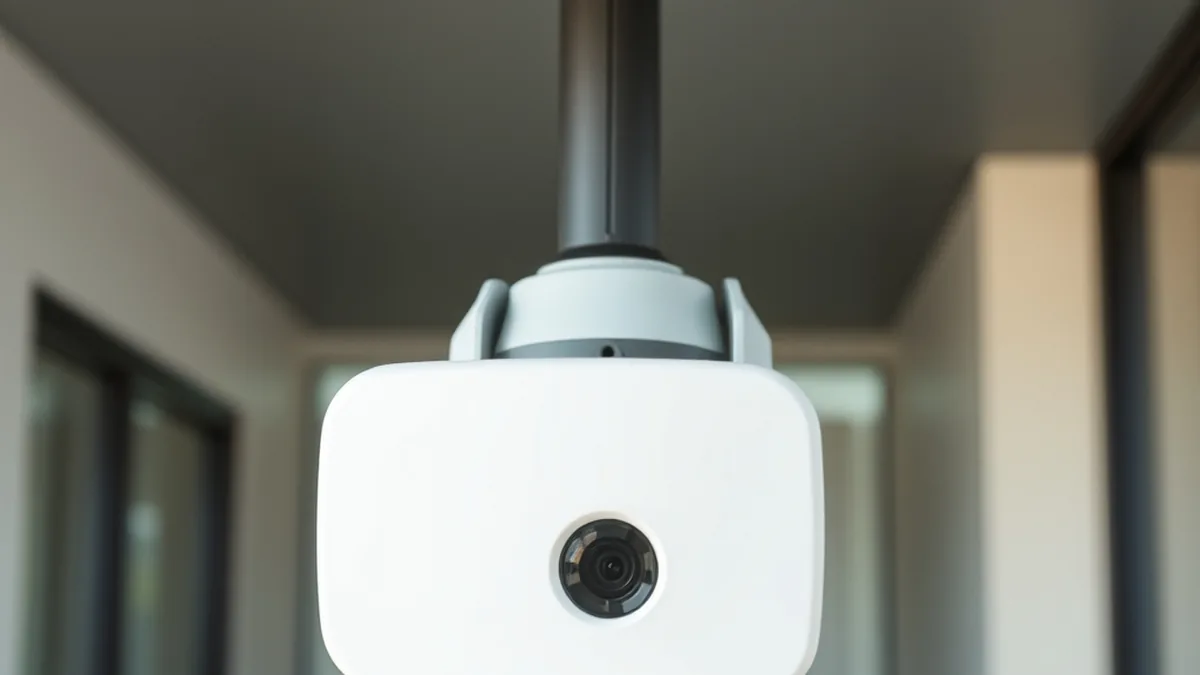
Recording someone without permission is not automatically unlawful under the Washington statutes discussed here. The answer depends on what the device captures, whether a communication or conversation is private, and whether visual recording meets the elements of Washington’s voyeurism statute. A silent sidewalk video, a security camera recording a private conversation, and a concealed changing-room camera raise different questions.
This article explains RCW 9.73.030 and RCW 9A.44.115. These statutes address different conduct: interception or recording of private communications and conversations, and certain privacy-invasive viewing or image recording. Neither a public location nor ownership of the camera substitutes for examining the relevant statutory requirements.
Federal consent rules and the limits of a state example
There is no single permission rule supplied by the provisions reviewed here for every recording in every U.S. state. Whether sound is intercepted, whether a communication is protected, the applicable jurisdiction and separate visual-privacy rules matter. The Washington discussion below is a state example, not a statement that Washington law applies nationwide.
The complete official 2024 text of 18 U.S.C. section 2511(2)(d) provides a federal exception for a person not acting under color of law who is a party to the communication, or where one party has given prior consent. That exception excludes interception for the purpose of committing a criminal or tortious act in violation of the identified federal or state law. It should not be summarized as unlimited permission whenever one participant agrees.
This is an edition-bounded description of the federal provision, not a survey of every state's current law or a conclusion that federal consent settles every video-recording question. The operative Washington provisions illustrate why audio consent and visual privacy need separate analysis. A recording elsewhere requires the applicable jurisdiction's rules; disabling sound alone does not establish that a visual recording is lawful.
Quick answer: Start with three questions
Before recording, ask:
- Does the device capture audio? A phone, doorbell camera, or security camera can record conversations as well as images. Its audio function requires a separate analysis.
- Is the communication or conversation private? RCW 9.73.030 generally requires the consent of all participants before covered private communications or conversations are intercepted or recorded, subject to exceptions.
- Does the visual recording involve protected privacy or intimate areas? Under RCW 9A.44.115, silent recording can constitute voyeurism when the applicable knowledge, consent, privacy, and purpose requirements are satisfied.
For example, a driveway camera’s microphone may raise a private-conversation question separate from its images. Conversely, an unwanted silent video does not, merely because it is unwanted, establish every element of voyeurism. The content captured and the circumstances matter.
Washington’s private-conversation recording rule
RCW 9.73.030(1) generally prohibits intercepting or recording specified private communications and conversations without first obtaining the consent of all participants. The prohibition applies to individuals and to the organizations and government entities identified in the statute.
The statute addresses two categories. The first is private communication transmitted by telephone, telegraph, radio, or another device between two or more individuals. The second is a private conversation intercepted or recorded using a device designed to record or transmit it. The statute applies regardless of how the recording or transmitting device is powered or actuated.
The critical limitation is private. Describing Washington as an “all-party-consent” state is useful shorthand for the ordinary rule, but it should not be mistaken for a requirement that everyone consent to every audible statement in every setting.
Likewise, participation in a private conversation does not, by itself, satisfy the ordinary consent requirement. Unless an applicable exception changes the rule, the statute requires consent from all persons engaged in that conversation—not just the person operating the recorder.
For a camera with a microphone, do not stop at asking whether the images are intimate. Audio that captures a private conversation presents a separate issue under RCW 9.73.030 even when the images do not meet the elements of voyeurism.
How recording announcements work
RCW 9.73.030(3) provides a specific way to establish consent. When all-party consent is required, consent is considered obtained when one party announces to all other parties, in a reasonably effective manner, that the communication or conversation is about to be recorded or transmitted.
If the conversation is recorded, the announcement must also be recorded. An announcement made outside the recording does not satisfy that express recording requirement.
A practical approach is to announce the recording before the substantive discussion begins and preserve the announcement in the recording. If another person joins, address that participant rather than assuming an earlier announcement reached them. These steps help focus attention on the statutory requirements: notice to all other parties, a reasonably effective announcement, and preservation of that announcement when recording the conversation.
Do not treat camera visibility as interchangeable with this announcement method. A visible device does not necessarily communicate whether it captures sound. The statute also has a separate, specifically limited news-gathering provision discussed below; that provision should not be generalized to every camera user.
Exceptions stated in RCW 9.73.030
Certain communications recorded with one party’s consent
RCW 9.73.030(2) permits recording with the consent of one party for specified wire communications or conversations:
- Those of an emergency nature, such as reporting a fire, medical emergency, crime, or disaster.
- Those conveying threats of extortion, blackmail, bodily harm, or other unlawful requests or demands.
- Those occurring anonymously, repeatedly, or at an extremely inconvenient hour.
- Those relating to communications by a hostage holder or barricaded person as defined in RCW 70.85.100, whether or not conversation ensues.
These categories are not a general exception for any disagreement or any conversation someone wants to preserve as evidence. Identify the particular statutory category rather than assuming that an unpleasant exchange permits recording. The exception still calls for one party’s consent.
Specified news-gathering activity
RCW 9.73.030(4) applies to an employee of a regularly published newspaper, magazine, wire service, radio station, or television station acting in bona fide news-gathering duties on a full-time, contractual, or part-time basis.
For that specified activity, the employee is deemed to have consent to record and divulge otherwise prohibited communications or conversations if consent is expressly given or the recording or transmitting device is readily apparent or obvious to the speakers. Withdrawal of consent after the communication has been made does not prohibit that employee from divulging it.
This provision is tied to the employees and news-gathering circumstances it describes. It is not a general rule that an obvious device establishes consent for every person making a recording.
Custodial interrogations
RCW 9.73.030(5) states that the section does not apply to recording custodial interrogations pursuant to RCW 10.122.040. That is a specific statutory cross-reference, not a general exemption for every recording made in custody.
Silent video and Washington’s voyeurism statute
The private-conversation rule should not be treated as a blanket prohibition on visual recording. RCW 9A.44.115 supplies a distinct framework for certain viewing, photographing, and filming.
The voyeurism statute defines “photographs” or “films” broadly. It includes making a photograph, motion picture film, videotape, digital image, or any other recording or transmission of a person’s image. Its reach is therefore not limited to a conventional camera or a saved video file.
Privacy and intimate areas
A “place where he or she would have a reasonable expectation of privacy” includes:
- A place where a reasonable person would believe they could disrobe privately without concern that another person was photographing or filming their undressing.
- A place where a person may reasonably expect to be safe from casual or hostile intrusion or surveillance.
The statute defines “surveillance” as secret observation of another person’s activities for the purpose of spying upon and invading that person’s privacy.
“Intimate areas” means any portion of a person’s body or undergarments covered by clothing and intended to be protected from public view. The definition is not limited to exposed skin.
These definitions make the particular circumstances important. Whether a location is publicly or privately owned does not replace the statutory privacy inquiry. The intimate-area provisions expressly cover circumstances in either public or private places.
First-degree voyeurism
First-degree voyeurism requires a person, for the purpose of arousing or gratifying anyone’s sexual desire, knowingly to view, photograph, or film either:
- Another person without that person’s knowledge and consent while the person is in a place where they would have a reasonable expectation of privacy; or
- Another person’s intimate areas without that person’s knowledge and consent, under circumstances where the person has a reasonable expectation of privacy, whether in a public or private place.
“Views” has its own definition: intentional looking for more than a brief period, in other than a casual or cursory manner, with the unaided eye or a device designed or intended to improve visual acuity. First-degree voyeurism therefore is not limited to making a recording.
Distribution is not an element listed for this offense. The sexual-purpose requirement, however, is essential; concealment or unwanted filming alone does not establish it.
Second-degree voyeurism
Second-degree voyeurism addresses intentional photographing or filming of another person for the purpose of capturing that person’s intimate areas, with intent to distribute or disseminate the photograph or film. It also requires the absence of that person’s knowledge and consent and circumstances supporting a reasonable expectation of privacy, whether in a public or private place.
Its distribution-intent requirement differs from first-degree voyeurism’s sexual-purpose requirement. The statutory language requires intent to distribute or disseminate; it does not list completed distribution as an element.
An upskirt recording can raise an intimate-area issue even in a public location. A concealed recording of someone undressing can raise a different privacy issue. In either situation, the applicable offense still requires proof of all its elements.
Correctional exclusion
RCW 9A.44.115 does not apply to viewing, photographing, or filming by personnel of the department of corrections or of a local jail or correctional facility for security purposes or during investigation of alleged misconduct by a person in the custody of the department of corrections or the local jail or correctional facility.
The exclusion identifies both the personnel and the purposes or circumstances it covers. It is not a general exception for homeowners, businesses, or anyone who describes a camera as a security device.
Applying the distinction to common settings
Home security cameras. Examine the microphone and camera separately. If the device records private conversations, the consent rule and its exceptions matter. If it captures someone undressing or records protected intimate areas, examine the voyeurism elements, including the required purpose or intent.
Sidewalks and other public places. A public location does not categorically resolve either issue. Ask whether any recorded audio is a private communication or conversation. For images, remember that the intimate-area provisions expressly apply in public as well as private places when their other requirements are met.
Restrooms and changing areas. The statutory definition expressly addresses places where a reasonable person would believe they could disrobe privately without being photographed or filmed. That makes privacy while undressing directly relevant, but the remaining elements of the particular voyeurism offense must still be considered.
Workplaces and businesses. Analyze what is captured rather than relying on ownership of the premises. Under RCW 9.73.030, the ordinary consent requirement concerns the participants in the private communication or conversation. Under RCW 9A.44.115, the analysis turns on the specified privacy, knowledge, consent, and purpose or intent requirements.
Practical steps before recording
Check whether each device records sound, including doorbells and security cameras. If recording a covered private conversation, obtain the required consent or identify a specific applicable exception. When using the statutory announcement method, make the announcement reasonably effective for all other parties and record it along with the conversation.
Review camera placement as well as audio settings. Avoid aiming cameras into places where people undress or at areas intended to be protected from public view. Treat audio consent and intimate visual privacy as separate questions; addressing one does not necessarily resolve the other.
Frequently asked questions
Can I secretly record a private conversation if I participate in it?
Participation alone does not satisfy RCW 9.73.030’s ordinary rule. All participants’ consent is generally required for covered private communications and conversations unless an applicable exception changes that requirement.
Can my security camera record sound?
Its audio function can fall within RCW 9.73.030 when it records private communications or conversations. A security purpose does not appear among the one-party-consent categories in subsection (2). Evaluate consent and any specific exception separately from the camera’s visual function.
Does a visible camera count as consent?
Do not assume so. The general announcement provision requires a reasonably effective announcement to all other parties and requires that announcement to be recorded when the conversation is recorded. The separate provision concerning readily apparent or obvious devices applies to the specified news-gathering employees and circumstances.
Can I record threats without everyone’s consent?
RCW 9.73.030(2) permits one-party-consent recording of wire communications or conversations conveying threats of extortion, blackmail, bodily harm, or other unlawful requests or demands. That wording does not make every argument a qualifying threatening communication.
Is silent video automatically lawful?
No blanket conclusion follows from disabling audio. RCW 9A.44.115 separately addresses certain viewing, photographing, and filming. Whether conduct constitutes voyeurism depends on the elements of the applicable offense, not simply on whether sound was recorded.
Must an intimate recording be shared to constitute voyeurism?
Completed sharing is not a listed element of either degree. First-degree voyeurism requires the specified sexual purpose. Second-degree voyeurism requires intent to distribute or disseminate, together with its other elements.
Conclusion
In Washington, separate private audio from silent images and intimate recording. RCW 9.73.030 generally requires all participants’ consent for covered private communications and conversations, with specified exceptions and an announcement mechanism. RCW 9A.44.115 addresses different conduct through its voyeurism definitions and elements. Clear consent, careful attention to microphone settings, and camera placement that respects intimate privacy are more reliable safeguards than assumptions based on ownership or public location.